Monday, February 18, 2013

Thursday, September 27, 2012
Find: iPad's domination of tablet traffic grows, but does Amazon care?
Sent to you via Google Reader
iPad's domination of tablet traffic grows, but does Amazon care?
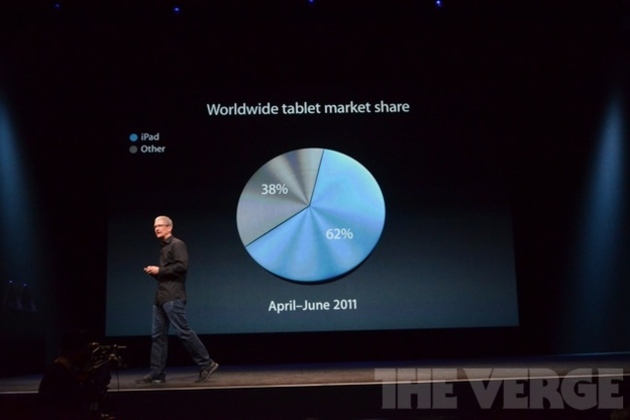 During his keynote speech for the release of the iPhone 5, Apple CEO Tim Cook poked fun of competitors in the tablet space with a few pie charts. While the iPad's market share in the tablet space has reportedly slipped to about 65 percent, Cook noted that iPads still make up 91 percent of web traffic from tablets. "I don't know what these other tables are doing. They must be in warehouses or on store shelves, or maybe in someone's drawer."
 Onswipe, a New York startup which helps publishers optimize their sites for touch enabled devices, has just released some new data, and it turns out Apple's lead could be even bigger than Cook boasted. The measurements are taken from 8.5 million unique visitors across the more than one hundred...
Thursday, May 31, 2012
Find: textbooks, ereaders, and technology in class
Class is less about receiving information, more about connections and application.
Future U: The stubborn persistence of textbooks

Future U
Textbooks are a thing of the past, says the common wisdom. Well, the common wisdom of the Technorati maybe. The problem with that thinking is that the number one publisher in the world is Pearson, a textbook publisher, who brought in $7.75 billion in 2009.
Pearson, as Tim Carmody noted in a January Wired article, owns 50 percent of the Financial Times, as well as the number two trade house: Penguin. The second largest textbook publisher, McGraw-Hill, owns Standard and Poor’s. To say textbooks are big business is like saying bullets are ouchie.
So writing the obituary for textbooks would be putting the cart before the horse. But pretending like they are not changing their shape, if not their nature, is to proclaim, from one's buggy, that automobiles are a passing fad.