Showing posts with label finds. Show all posts

Wednesday, December 4, 2013

Find: Windows 8.x growth flatlines, Internet Explorer 11 makes a splash


// published on Ars Technica // visit site

Windows 8.x growth flatlines, Internet Explorer 11 makes a splash


November was the first full month of availability for both Windows 8.1 and OS X 10.9. After the initial surge in October, Windows 8.1 increased its usage share of the Web by fifty percent. OS X 10.9, however, almost tripled its share—bringing Apple's operating system within spitting distance of Microsoft's.


In the browser space, the launch of Internet Explorer 11 for Windows 7 (as an automatic update, no less) has seen that browser more than double its share in a month.


Read 8 remaining paragraphs


Friday, November 1, 2013

Internet Explorer continues to Find: Webstate - ie grows on desktops, chrome falls; on mobiles, android up, safari down


// published on Ars Technica // visit site

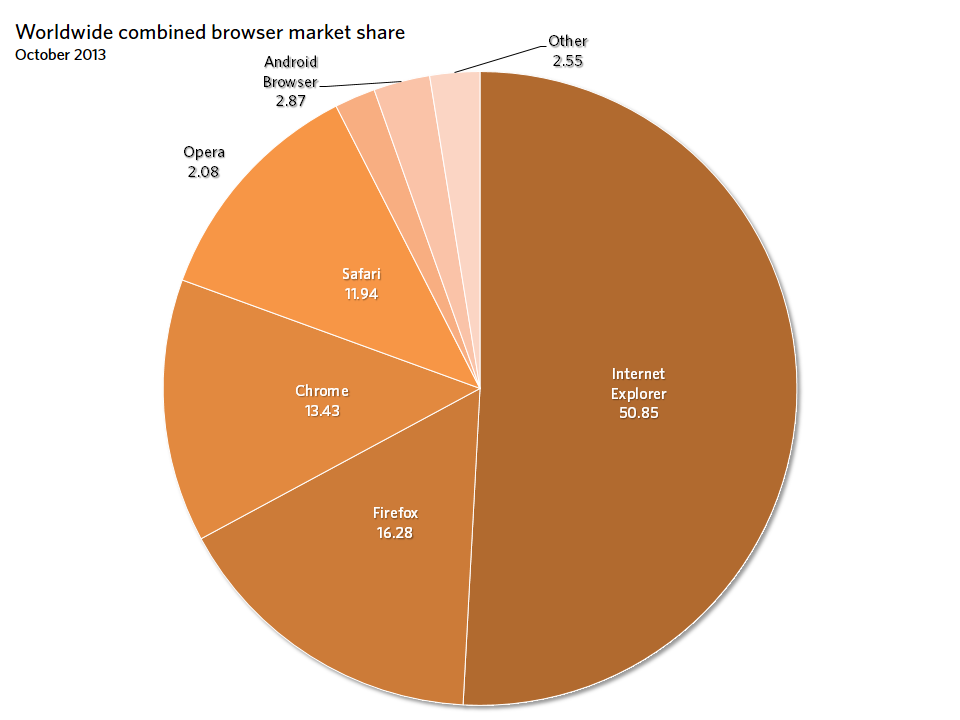
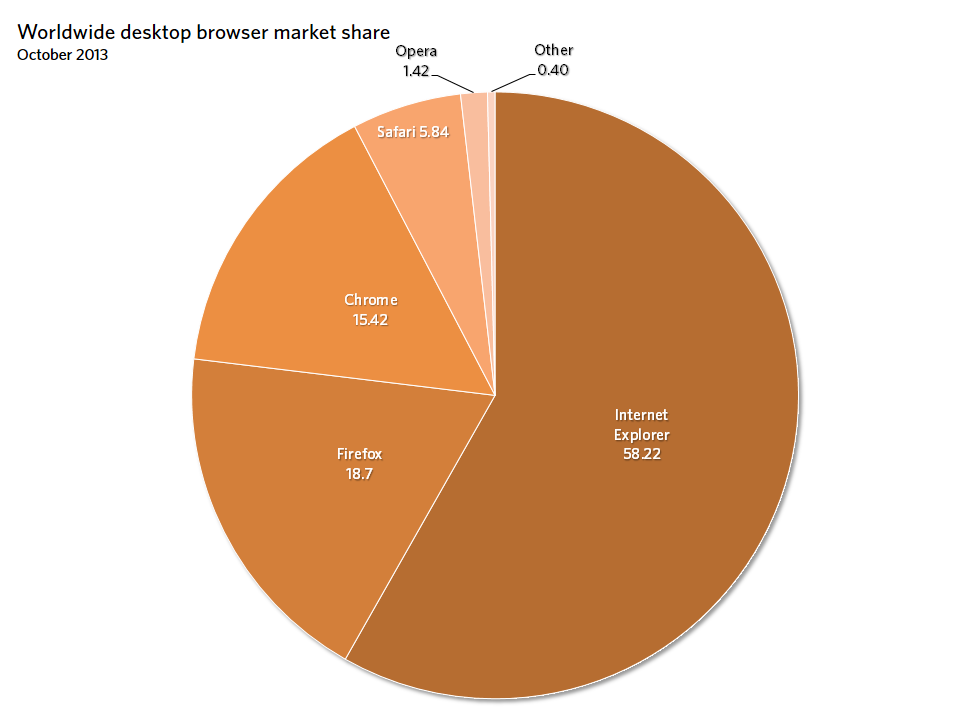
Internet Explorer continues to grow, and Mavericks already on 11 percent of Macs


If nothing else, the browser and operating system numbers from October showed the huge behavioral differences between Mac users and Windows users. Both Microsoft and Apple released new versions of their desktop operating systems last month, with Windows 8.1 from Microsoft and OS X 10.9 Mavericks from Apple. In raw terms, Windows 8.1 already has many more users than Mavericks—about double—but as a proportion of the actual user base of the two platforms, it's the Apple software that's in the lead. 10.9 percent of Mac users are on the latest version of the operating system. Just 1.9 percent of PC users are on the newest Windows.


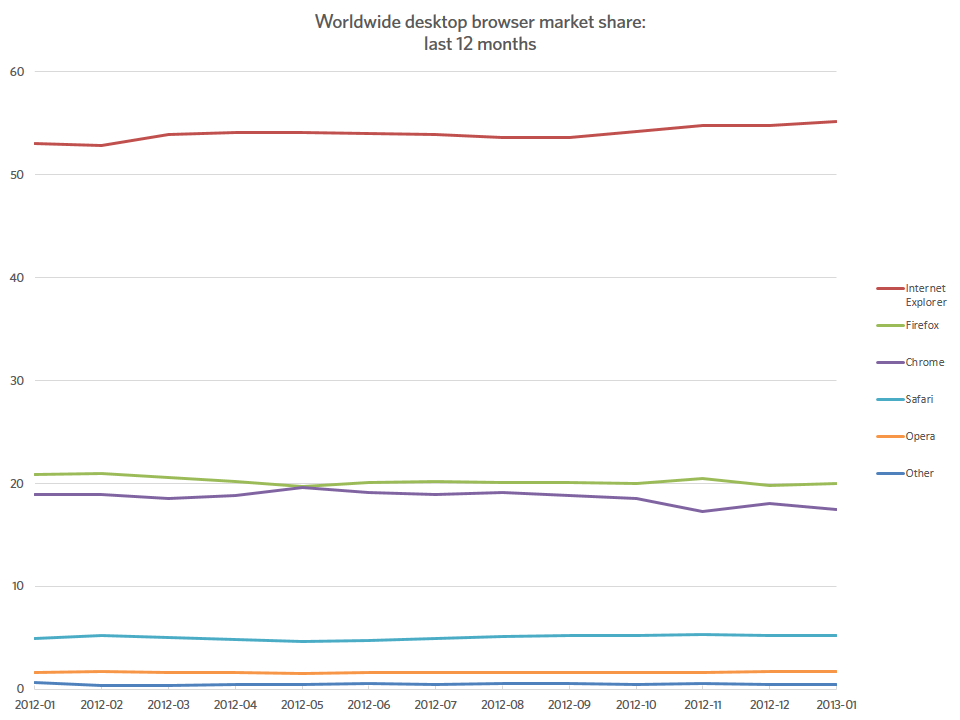
In a month that also saw Microsoft release a new version of its browser, not a great deal has changed among desktop browser preference. Internet Explorer picked up 0.42 points, Firefox gained 0.10 points, and Chrome dropped 0.54 points. Safari and Opera saw a gain of 0.07 and a loss of 0.05 points, respectively.


Read 6 remaining paragraphs


Friday, September 6, 2013

Find: Google's Trojan horse: how Chrome Apps will finally take on Windows

Creating a native experience seems to require abandoning the browser itself as platform: these apps will only work on google's proprietary toolset. That said, google seems committed to ensuring that toolset exists on all major OSs. 

*** 
 
// published on The Verge - All Posts // visit site

Google's Trojan horse: how Chrome Apps will finally take on Windows

Today, on Chrome's fifth birthday, Google is announcing the rollout of what it's calling Chrome Apps. Don't feel bad if you're confused by the name. Chrome has been serving up web apps since 2010 when the Chrome Web Store opened up alongside the launch of the Chrome OS. Chrome Apps, however, are different than what's been offered before. They comprise Google's bid to elevate the browser into a true app platform — one that it thinks could one day be a legitimate rival to Windows, OS X, and someday iOS and even Android.

Continue reading…

Thursday, September 5, 2013

Find: Sorry, Comcast and Verizon customers: RCN delivers faster Netflix

Nice illustration of peering. 


*** 
 
 
// published on Ars Technica // visit site

Sorry, Comcast and Verizon customers: RCN delivers faster Netflix

Netflix's "Super HD" content is only available to customers whose ISPs use Netflix's free caching service.
Netflix

In our recent article "Why YouTube buffers: The secret deals that make—and break—online video," we described how battles between ISPs and streaming video providers can have a dramatic impact on video quality in customers' homes.

The chief issues? ISPs refusing to upgrade peering connections to relieve congestion and ISPs refusing to take YouTube owner Google and Netflix up on their offers of free caching equipment that puts video content closer to the last mile. To a cynical eye, it looks like ISPs either want money from Google and Netflix or want to degrade Google and Netflix quality to drive users to their own services.

But there are exceptions, mostly among small ISPs. RCN, a regional provider in Chicago, Boston, New York, Washington, DC, and parts of Pennsylvania, took Netflix up on its offer (called Open Connect), and its decision is justified by the data. Netflix has published its first regional speed index, just for the Boston area, and it showed that "the average speeds for Netflix streams on the RCN network in Boston outperformed other Internet Service Providers (ISPs) by as much as 70 percent. This means that those Netflix members who were also RCN customers enjoyed better picture quality, quicker access to their favorite TV shows and movies, and more reliable playback delivered via the Internet from Netflix, especially during peak viewing hours."

Read 6 remaining paragraphs

Tuesday, September 3, 2013

Find: Windows 8 more widely used than OS X, IE still on the rise

In mobile, safari constant, chrome gains at opera expense. 

*** 
 
// published on Ars Technica // visit site

Windows 8 more widely used than OS X, IE still on the rise

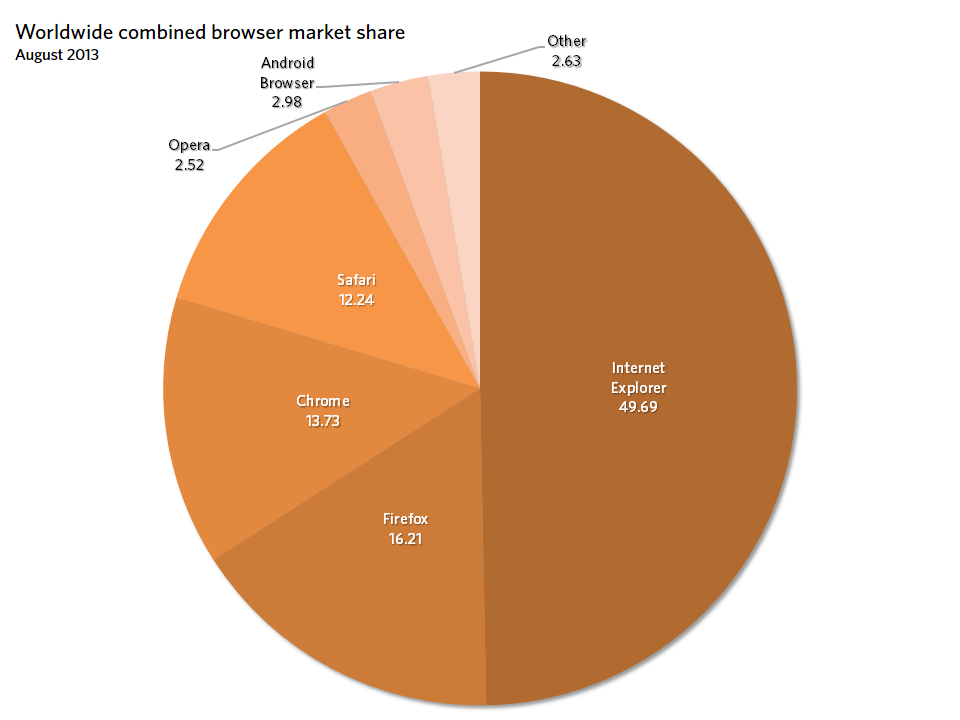
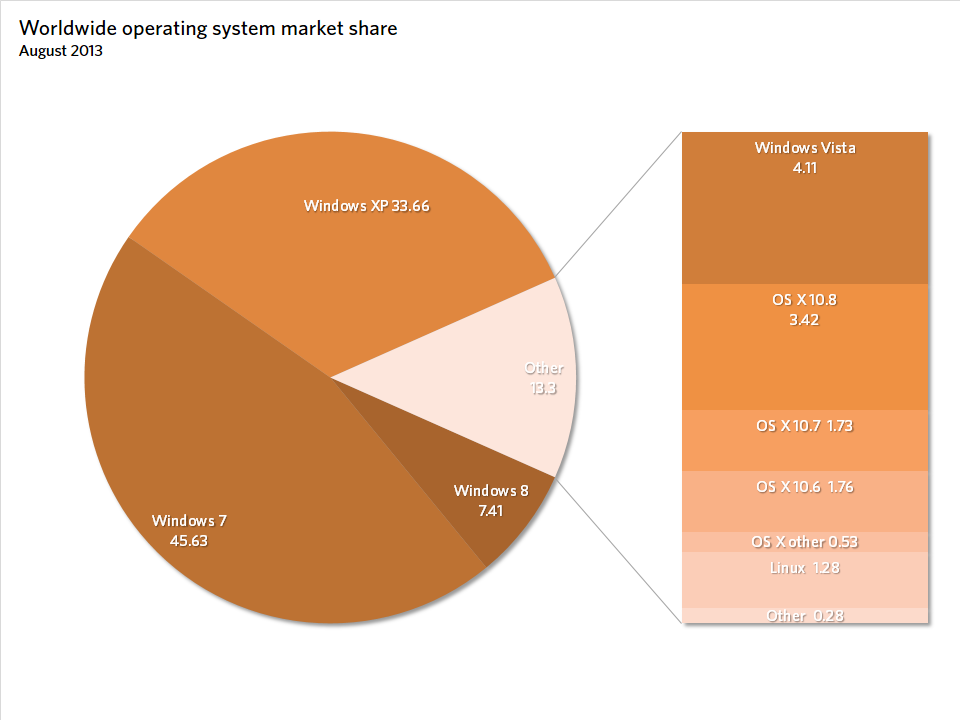
In July, Windows 8 passed Windows Vista in market share. In August, it passed every single version of Apple's OS X, combined. Internet Explorer 10 grew sharply, too, with almost one in five Internet users now on the latest version of Microsoft's browser.

Windows 8 made substantial gains in August, picking up 2.01 points of share. This is 37 percent growth on July's figure. Windows XP also fell substantially, losing 3.53 points. With luck, this might mean that Windows XP is finally on the way out. It has less than a year until it stops receiving free security patches from Microsoft; once this happens, it will essentially be in a state of permanent zero day exploits. Even this level of decline isn't enough to see the operating system eradicated in time for its end of life. That's good news for spammers, who'll have plenty of zombie machines to recruit into botnets, but bad news for everyone else.

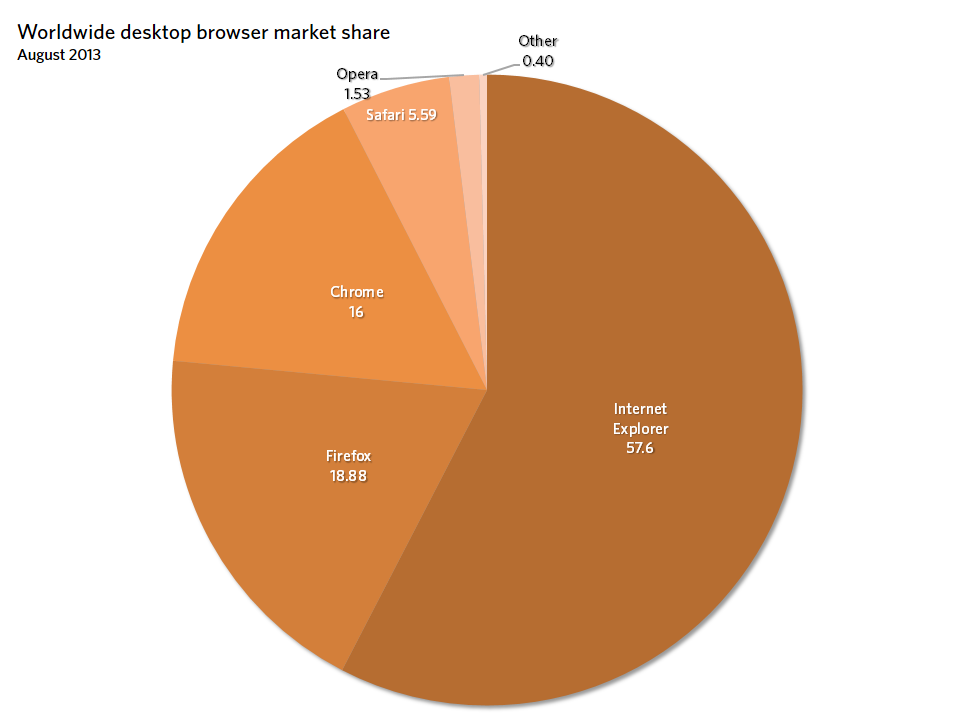
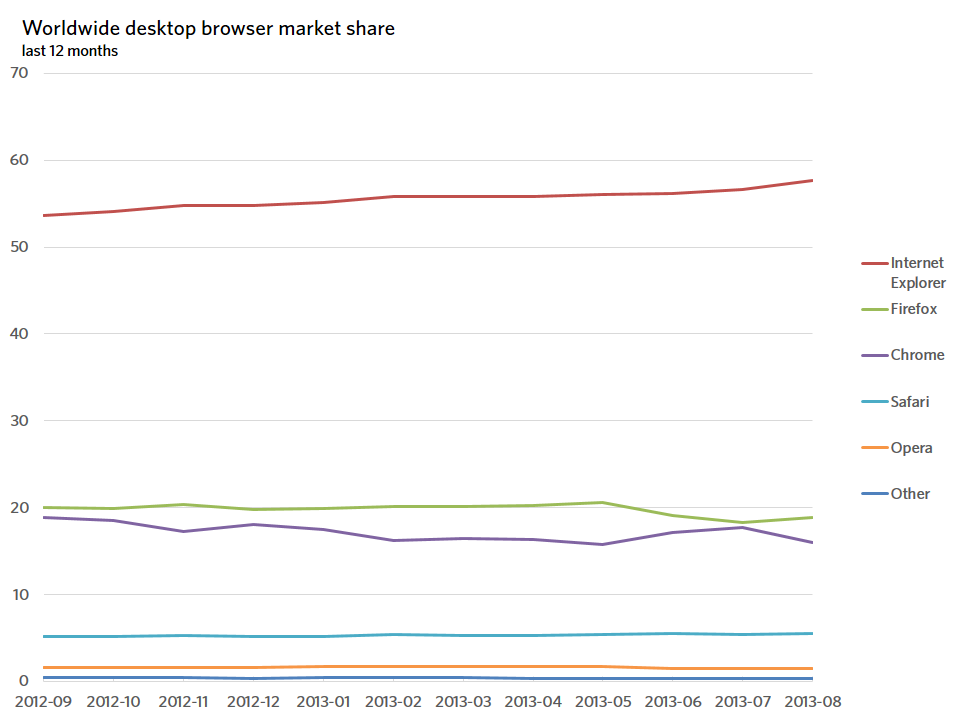
Among desktop browsers, Internet Explorer was up 0.99 points, Firefox was up 0.59 points, and Safari was up 0.17 points. Chrome, however, was down significantly, losing 1.76 points. This means that yet again Chrome has closed in on Firefox, almost passing it, only to fall back.

Read 5 remaining paragraphs

Monday, September 2, 2013

Find: Interactive map turns Dutch construction trends into epic graphics


// published on The Verge - All Posts // visit site

Interactive map turns Dutch construction trends into epic graphics

Plotting out the 320,000-plus buildings in Brooklyn and shading them according to their year of construction was a painstaking labor of love by Thomas Rhiel. And now his idea is going even bigger. Nearly 10 million buildings in the Netherlands — 9,866,539 to be exact — have been given the same treatment. Set to a black background, the hues of red, yellow, and blue that outline buildings vary depending on how long each has been standing. Much like Brooklyn, architecture of the Netherlands is a mix of old and new, but the sheer scale here is extraordinary and something to marvel. Clicking on an individual building will display its size, function (i.e. office, school, etc.) and year it was constructed. And since the tool pulls...

Continue reading…

Saturday, April 6, 2013

Find: Google going its own way, forking WebKit rendering engine

This diversity will be good, and focusing in the code components chrome needs may also make it faster. 

---
 
 
Shared via feedly // published on Ars Technica // visit site
Google going its own way, forking WebKit rendering engine
Aurich Lawson (with apologies to Bill Watterson)

Google announced today that it is forking the WebKit rendering engine on which its Chrome browser is based. The company is naming its new engine "Blink."

The WebKit project was started by Apple in 2001, itself a fork of a rendering engine called KHTML. The project includes a core rendering engine for handling HTML and CSS (WebCore), a JavaScript engine (JavaScriptCore), and a high-level API for embedding it into browsers (WebKit).

Though known widely as "WebKit," Google Chrome has used only WebCore since its launch in late 2008. Apple's Safari originally used the WebKit wrapper and now uses its successor, WebKit2. Many other browsers use varying amounts of the WebKit project, including the Symbian S60 browser, the BlackBerry browser, the webOS browser, and the Android browser.

Read 10 remaining paragraphs

Find: Google offers Python and Java libraries that bring SMS, voice to apps

   
Shared via feedly // published on Ars Technica // visit site
Google offers Python and Java libraries that bring SMS, voice to apps

Google has released a set of Python and Java libraries that help developers who use Google App Engine integrate text messaging and voice communications into their apps.

Google App Engine is Google's cloud-based development platform, which lets developers build and host applications in Google data centers. The new Python and Java libraries for App Engine add easy access to SMS and voice capabilities by working with the APIs offered by Twilio, another cloud development platform that focuses on communication-heavy applications for mobile devices, desktops, and the Web.

"Twilio Voice enables your application to make and receive phone calls," Google notes in a description of the new integration. "Twilio SMS enables your application to send and receive text messages. Twilio Client allows you to make VoIP calls from any phone, tablet, or browser and supports WebRTC."

Read 2 remaining paragraphs | Comments


Saturday, March 23, 2013

Find: The battle behind a more accessible web for the deaf and blind

   
Shared via feedly // published on The Verge - All Posts // visit site
The battle behind a more accessible web for the deaf and blind
Chrome_ipad_large

The web is an integral part of the way we reach out and communicate with one another, but navigating the internet can be difficult for those who are deaf and blind. The Wall Street Journal takes a look at the efforts of some individuals to force businesses to make their websites more friendly for the disabled — just as they would have to do with physical locations. Some of the battles involve the Americans with Disabilities Act of 1990, with those in favor of change arguing that the Act applies to the web even though it doesn't name internet services specifically. Lawsuits against companies like Netflix and Target have even proven successful, with the former company agreeing to make all of its programming closed-captioned as a result....

Continue reading…


Friday, March 15, 2013

Find: New Netflix ISP Speed Index

New Netflix ISP Speed Index

Today we launched the “Netflix ISP Speed Index,” a new Web site that gives consumers insight into which Internet Service Providers (ISPs) provide the best Netflix streaming experience.

Located at http://ISPSpeedIndex.Netflix.com/ the new Web site provides an easy overview of the performance of ISPs in several of the countries Netflix is available in. Updated on a monthly basis, the site allows for easy comparison of ISPs in a country as well as international comparisons. At launch the Netflix ISP Speed Index includes data for the U.S., Mexico, Ireland, U.K., Norway, Sweden, Denmark and Finland.

A few data points from the new Netflix ISP Speed Index, reflecting data for February:

  • At 3.35Mbps, Google Fiber in the U.S. provides the highest average Netflix streaming bitrate anywhere Netflix is available
  • After Google Fiber, Sweden’s Ownit delivers the highest average Netflix bitrate at 2.99 Mbps
  • Netflix members in Finland receive, on average, the highest bitrates, while members in Mexico have the slowest connections, on average
  • Scandinavia proves its reputation as a great broadband region, all ISPs in Denmark, Sweden and Finland delivered averages above 2Mbps
The launch coincides with the release of our February ISP Rankings, which are on the ISP Speed Index and also below for just the U.S.

The Netflix ISP Speed Index is based on data from the more than 33 million Netflix members who view over 1 billion hours of TV shows and movies streaming from Netflix per month. The listed speeds reflect the average performance of all Netflix streams on each ISP's network and are an indicator of the performance typically experienced across all users on an ISP network.

Note: the average performance is below the peak performance due to many factors including the variety of encodes Netflix uses to deliver the TV shows and movies as well as the variety of devices members use and home network conditions. These factors cancel out when comparing across ISPs.

Joris
Joris Evers is director of corporate communications at Netflix

Thursday, March 14, 2013

Find: Chrome hits 17-month low, Windows 8 still only creeping upward

Chrome hits 17-month low, Windows 8 still only creeping upward


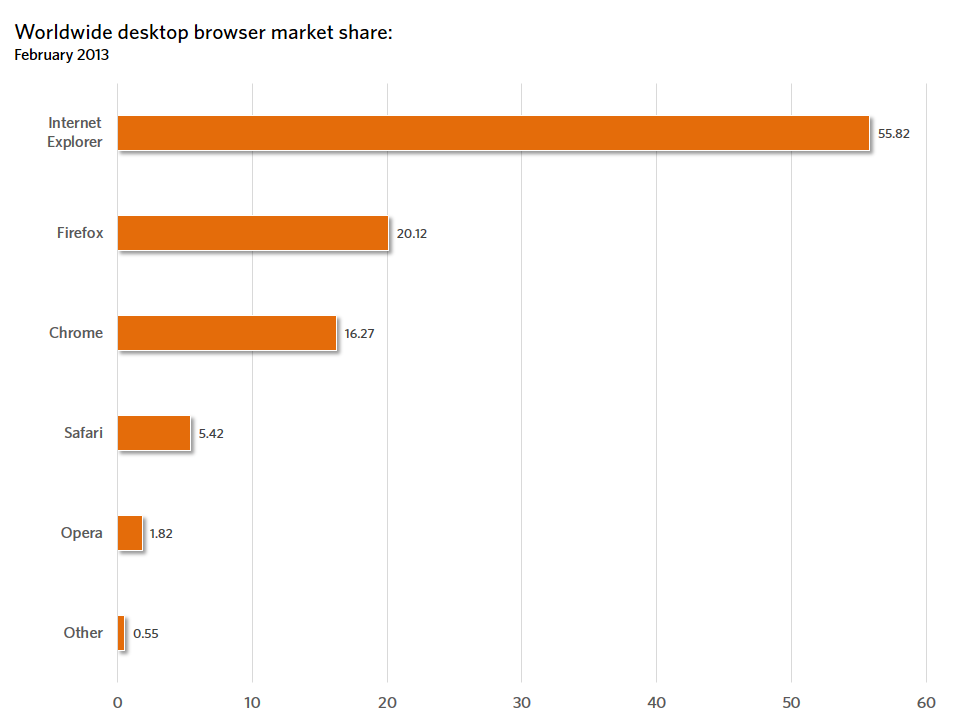
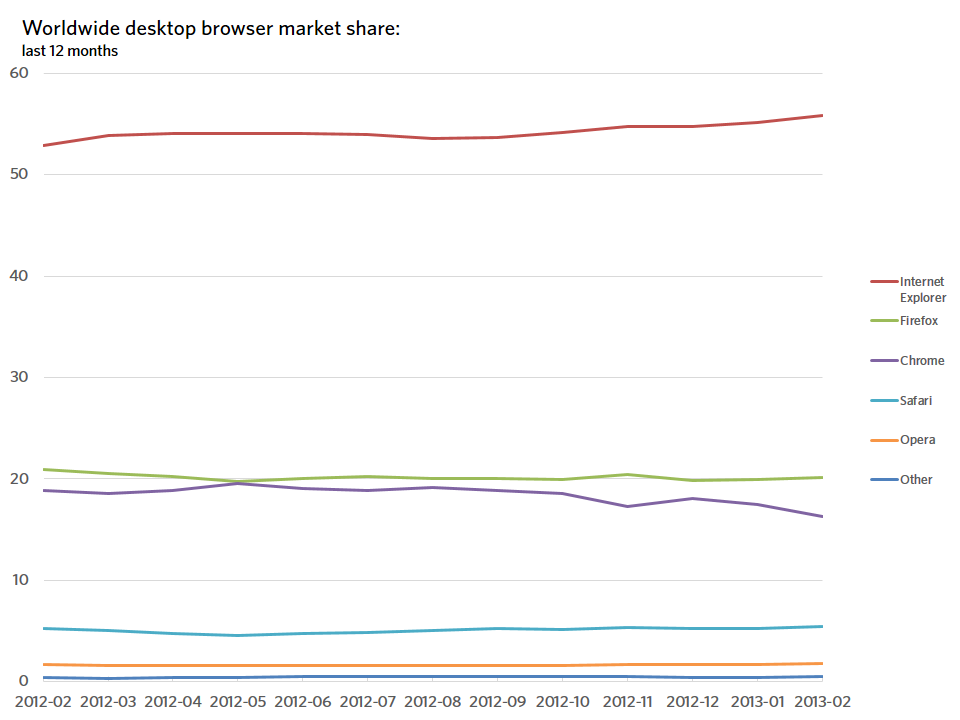
Microsoft's browser did as well as Google's browser did badly in February. Internet Explorer's share is the highest it's been in a year and a half. Chrome's is the lowest it's been in almost as long.


Internet Explorer was up 0.68 points to 55.82 percent. Firefox was back up above 20 percent, growing 0.18 points to 20.12 percent. Chrome was down sharply, losing a surprising 1.21 (giga) points, for a share of 16.27 percent. Safari and Opera were both up slightly, with gains of 0.18 and 0.07 points for a total of 5.42 and 1.82 percent, respectively

Friday, March 8, 2013

Find: Improve your App Engine skills with Google Developers Academy

Improve your App Engine skills with Google Developers Academy

Author PhotoBy Wesley Chun, Developer Relations Team

Cross-posted with the Google App Engine Blog

Are you developing on App Engine today or interested in learning how to use it? If you've gone through all the great App Engine docs and Getting Started tutorials (Python, Java, or Go) but want to take your App Engine skills a step further, then Google Developers Academy (GDA) is the place to go! We launched GDA this past summer at Google I/O 2012, with content for beginners as well as seasoned developers. What can you find on App Engine in GDA today?

computers in a classroom

If you’re interested in getting more background on what cloud computing is and where App Engine fits into that ecosystem, then this intro class (Introduction to Google App Engine) is for you. Once you’re done with this class, you’ll be ready to tackle the Getting Started tutorial, and after that, move on to the App Engine 101 in Python class.

While some of the material found in App Engine 101 is similar to what's in the Getting Started tutorial, the 101 class targets developers who skipped the tutorial or completed it at some point in the past but don't want to repeat the exact same thing. The main differences include the following changes to the tutorial's content:

  • Use of the Python NDB API

  • Jinja2 templates

  • Discussion of data consistency and datastore indexes

You can use the relational MySQL-compatible Google Cloud SQL service as an alternative to App Engine's native non-relational...

Tuesday, February 19, 2013

Find: Facebook, Twitter, Apple hack sprung from iPhone developer forum

Watering hole attack on the big guys uses a zero day java exploit. 

---

Facebook, Twitter, Apple hack sprung from iPhone developer forum


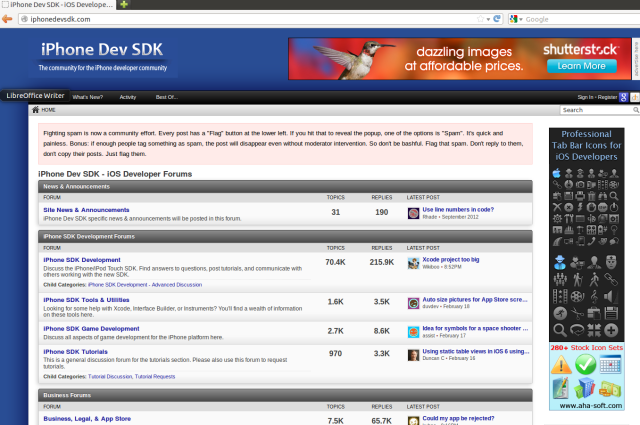
iPhone Dev SDK, the web forum that was at the center of the hack of Facebook and other companies in January.


The website used to infect engineers at Facebook with espionage malware has been identified as an iPhone developer forum by people close to the investigation into the hacking incident.


That page, at the iPhone developer website iphonedevsdk.com, was used to expose visitors to a previously undocumented vulnerability in Oracle's Java browser plugin. The "zero-day" exploit allowed the attackers to install a collection of malware on the Java-enabled computers of those who visited the site. Ars readers shouldn't visit the site because it still may still be compromised.


iphonedevsdk.com is an example of a "watering hole" attack. These attacks compromise a site popular with a population of desired hacking victims, using security vulnerabilities to install code on the Web server hosting it, which injects attacks into the HTML sent to its visitors. In this case, the site, which hosts a Web forum for iPhone developers, netted the hackers access to the computers of software engineers and developers working on mobile application projects for a number of companies, including Facebook. The exploit was the source of the attack on Twitter that led to the theft of Twitter usernames and passwords, according to a source familiar with the attack, and was used to infect computers belonging to Apple engineers. The source requested anonymity because he was not authorized to provide the details to the press.

Sunday, February 17, 2013

Find: Securing your website: A tough job, but someone's got to do it

Good survey of web security and attacks. 

---

Securing your website: A tough job, but someone's got to do it


In 2006, members of a notorious crime gang cased the online storefronts belonging to 7-Eleven, Hannaford Brothers, and other retailers. Their objective: to find an opening that would allow their payment card fraud ring to gather enough data to pull off a major haul. In the waning days of that year they hit the mother lode, thanks to Russian hackers identified by federal investigators as Hacker 1 and Hacker 2.


Located in the Netherlands and California, the hackers identified a garden-variety flaw on the website of Heartland Payment Systems, a payment card processor that handled some 100 million transactions per month for about 250,000 merchants. By exploiting the so-called SQL injection vulnerability, they were able to gain a toe-hold in the processor's network, paving the way for a breach that cost Heartland more than $12.6 million.


The hack was masterminded by the now-convicted Albert Gonzalez and it's among the most graphic examples of the damage that can result from vulnerabilities that riddle just about any computer that serves up a webpage. Web application security experts have long cautioned such bugs can cost businesses dearly, yet those warnings largely fall on deaf ears. But in the wake of the Heartland breach there was no denying the damage they can cause. In addition to the millions of dollars the SQL injection flaw cost Heartland, the company also paid with its loss of reputation among customers and investors.

Saturday, February 2, 2013

Find: indystate, browsing - safari dominates mobile browsing at 60 %

Internet Explorer still growing as Windows 7 starts its decline

In the first month of 2013, Internet Explorer's desktop market share is continuing to slowly climb upwards, with Firefox consolidating its number two spot. There are signs that Windows 7 may have peaked as Windows 8 is slowly picking up users.


January was a good month for Microsoft's browser, up 0.37 points to 55.14 percent. Firefox also grew, up 0.12 points to 19.94 percent. Chrome fell, down 0.56 points to 17.48 percent. Safari was unchanged at 5.24 percent, and Opera up a hair, gaining 0.04 points to reach 1.75 percent.

The improvement of Internet Explorer's position masks a story that's decidedly mixed for Microsoft. Windows 7 fell for the first time in January, dropping 0.63 points from a high of 45.11 percent to 44.48 percent. Windows 8's slow growth is continuing, up 0.54 points from 1.72 percent to 2.26 percent. There's also a small number of tablet users, with 0.08 percent on Windows 8 Touch and a minuscule 0.02 percent on Windows RT Touch.

Thursday, January 10, 2013

Find: on using web Apis

Leads on using web Apis

Tim O'Reilly (@timoreilly)

1/9/13, 3:31 PM

Short @Codecademy courses on how to use APIs to many common services. bit.ly/XkMdl9 Nice work!

Find: the father of the Internet says that it's been monopolized

Vint Cerf: Internet competition has “evaporated” since dial-up


Internet co-creator Vint Cerf speaking at CES.

Chris Foresman

Vint Cerf, co-creator of the Internet, said today he is troubled by the prospect of companies like AT&T avoiding government regulation after the transition from traditional phone technology to all-IP networks. Already, he said, competition was decimated when the Internet moved from dial-up providers to cable companies and telcos.

Cerf—who made the Internet possible by co-developing the Internet protocol and Transmission Control Protocol technology 40 years ago—was speaking at the Consumer Electronics Show's "Silvers Summit" on technology geared toward the older population. "Some people think silver surfers don't know how to use technology. I have news for you: some of us invented this stuff," the 69-year-old Cerf noted.

This happened to be just one day after AT&T described its plans to retire the traditional Public Switched Telephone Network and become an all-IP telco. As we reported, AT&T wants to make this transition without being subject to what it calls "monopoly-era regulatory obligations," which AT&T thinks are unjustified in the Internet age. 

Find: Yikes! Extremely critical Ruby on Rails bug threatens more than 200,000 sites

Extremely critical Ruby on Rails bug threatens more than 200,000 sites

Hundreds of thousands of websites are potentially at risk following the discovery of an extremely critical vulnerability in the Ruby on Rails framework that gives remote attackers the ability to execute malicious code on the underlying servers.

The bug is present in Rails versions spanning the past six years and in default configurations gives hackers a simple and reliable way to pilfer database contents, run system commands, and cause websites to crash, according to Ben Murphy, one of the developers who has confirmed the vulnerability. As of last week, the framework was used by more than 240,000 websites, including Github, Hulu, and Basecamp, underscoring the seriousness of the threat.

"It is quite bad," Murphy told Ars. "An attack can send a request to any Ruby on Rails sever and then execute arbitrary commands. Even though it's complex, it's reliable, so it will work 100 percent of the time."


Sunday, January 6, 2013

Find: IPv6 takes one step forward, IPv4 two steps back in 2012

IPv6 takes one step forward, IPv4 two steps back in 2012


Aurich Lawson / Thinkstock

In hindsight, we reached peak IPv4 two years ago. The good news is that IPv6 is doing very well—but not nearly well enough. Is the IPv6 glass 1 percent full or 99 percent empty?

"Hi, I'd like to sign up for Internet service at my new apartment."

"That's great! We have the highest speeds at the best prices, you won't be disappointed. But unfortunately, last week Europe ran out of IPv4 addresses. We still have plenty of IPv6, though."